

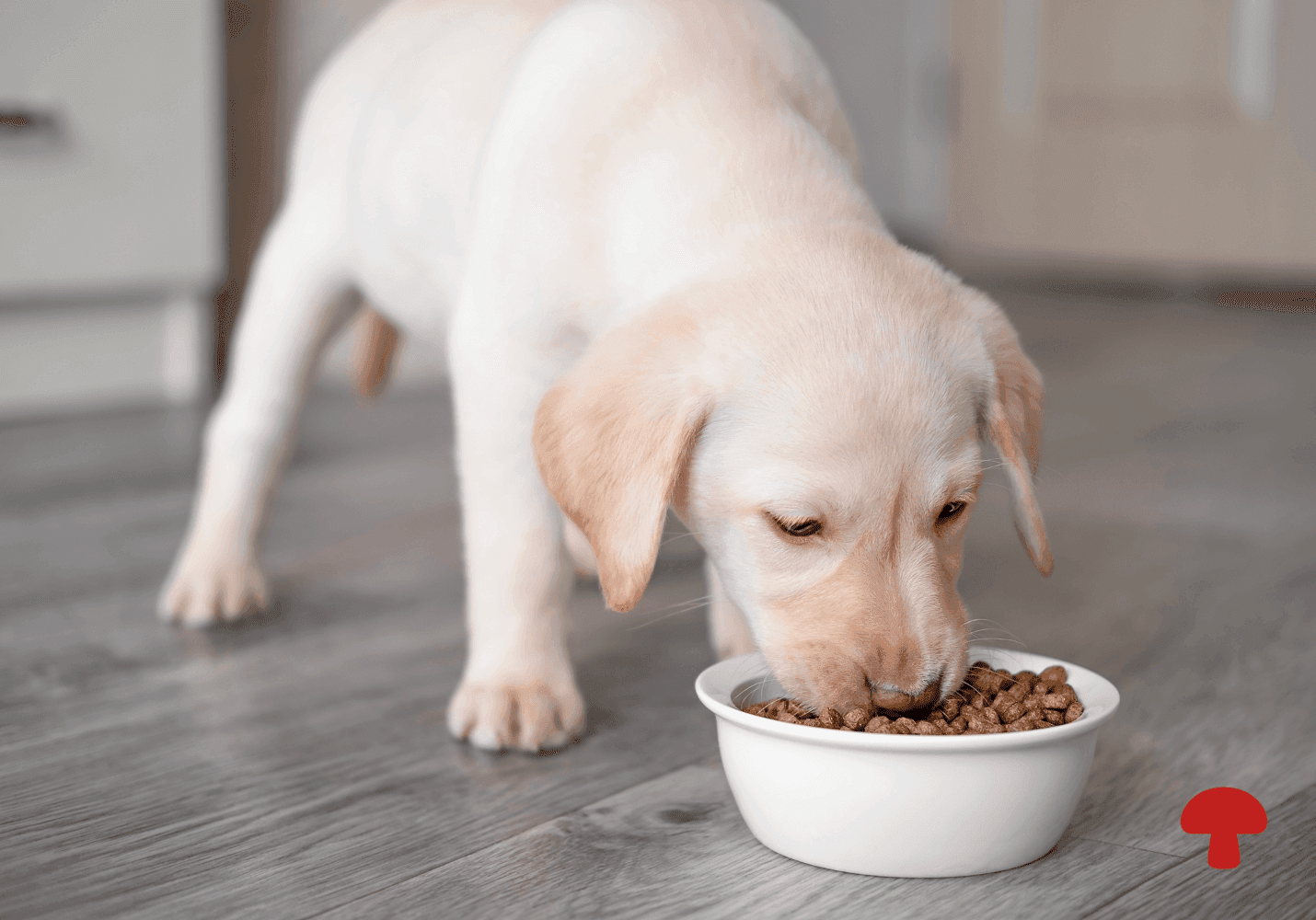
Pet owners care more about gut health than ever. Recent industry data shows that 60% of pet owners want their pet food to carry a digestive health benefit. Most people tend to reach for probiotics first. But there is another part of the gut story worth knowing: the canine mycobiome.
The mycobiome is the fungal part of the gut microbiome. Mushroom ingredient research also examines bacterial communities and dietary fibres. A change in gut bacteria is not automatically evidence of a change in the mycobiome, or of a clinical benefit. It is important to keep those endpoints separate when evaluating a formulation.
What Is the Canine Mycobiome?
The canine mycobiome is the community of fungi that live in a dog's gut alongside bacteria. Together, these microbes shape digestion, immune signaling, and many other body systems. A healthy gut depends on balance across this whole community, not just one type of microbe.
Researchers are starting to study how fungal fibers from food shape this community. Studies in humans have shown that chitin-glucan, a fiber found in mushroom cell walls, can change the makeup of the gut microbiome and improve metabolic markers. This research helps explain why mushrooms are getting attention as a gut health ingredient for pets.
How Mushroom Fibers Feed the Good Bacteria
Prebiotics are food for beneficial microbes. Mushrooms deliver two key prebiotic fibers that the gut bacteria can use.
The first is beta-glucans. These are fermentable fibers found in all functional mushrooms. Healthy adult dogs given purified beta-glucans at 10.60 mg per kilogram of body weight per day showed a healthier shift in their gut bacteria, with no negative effects on digestion. Beta-glucans also interact directly with canine immune cells. Studies showed that canine macrophages exposed to beta-glucans developed "trained immunity," producing higher levels of pro-inflammatory cytokines (TNF-α, IL-6, and IL-1β) and showing stronger antimicrobial activity when later challenged with bacterial stimuli. The same study confirmed that dogs have functional Dectin-1 receptors, the immune sensors that recognize beta-glucan structure. This suggests that the immune effects of beta-glucans seen in humans also apply to dogs.
The second is chitin. Chitin is part of the natural fungal cell wall. Chitin-containing fungal fibers interact with the gut microbiome in ways that support immune signaling at the gut lining. Mushroom cell walls are made from a mix of fibers, including beta-glucan, chitin, and mannans, that work together as a structural team.
It is worth noting that the functional mushroom industry includes many valid ways of delivering these compounds. Both concentrated extracts and full-spectrum mushroom powders can deliver effective doses of beta-glucans. The math just looks different. At Myzel Organics, we believe full-spectrum cultivation preserves the natural fiber matrix that the gut microbiome interacts with.

Three Functional Mushrooms for Dog Gut Health
The examples below describe different preparations and endpoints. Evidence for a species, an isolated polysaccharide or an extract should not be treated as a trial of every powder containing that mushroom.
Turkey Tail (Trametes versicolor) contains beta-glucans, polysaccharide-K (PSK), and polysaccharide-peptide (PSP). These compounds support gut health, microbiome balance, and immune function. Turkey Tail mushrooms for dogs are one of the most studied options for digestive health support.
Lion's Mane (Hericium erinaceus) has been studied in a 16-week feeding trial in 18 aged dogs. The researchers measured bacterial community differences, with different findings at the two inclusion levels. This was not a comparison of every commercial ingredient or proof of a clinical gut-health outcome.
Reishi (Ganoderma lucidum) delivers polysaccharides at high standardization levels. In a 2024 study, 40 adult beagles were given Reishi at 15 mg per kilogram of body weight per day for 28 days. The Reishi used was standardized to over 70% total polysaccharides. Dogs in this group showed stronger immune cell activity and better antibody response after a vaccine, with no negative effects on digestion, stool, skin, or coat. Reishi mushrooms for dogs offer real value where immune and gut support overlap.
Gut Health Connects to Whole-Body Wellness in Dogs
A balanced gut microbiome shapes more than digestion. Beta-glucans are recognized by immune receptors like Dectin-1 in the gut lining, which supports innate immune function. The gut-brain axis also links digestive health to behavior and aging, and Lion's Mane is studied for its support of nerve growth factor. On the inflammation side, beta-glucans lowered IL-6 (a protein that drives inflammation) and raised IL-10 (a protein that calms it) in dogs with inflammatory bowel disease. Functional mushrooms work as a foundation ingredient, not a single-purpose additive.
The pet care industry is moving fast toward preventative wellness, and gut health sits at the center of it. In 2025, 78% of global pet owners reported interest in products that may help increase their pet's lifespan. NielsenIQ also reported that functional pet food formulations positioned for gut health, joint support, and longevity are outperforming the broader category.
The reason this matters: many traditional pet diets rely heavily on processed ingredients and limited fiber diversity, which can leave gaps in what the canine mycobiome needs to stay balanced. Since most of a dog's immune system lives along the gut lining, supporting the gut is one of the most direct ways to support whole-body wellness.
For formulators, this is where functional mushrooms fit naturally into a preventative health story, offering a research-supported, whole-food way to deliver on the benefits pet owners are actively asking for.
A Whole-Food Approach to the Canine Mycobiome
Mushroom ingredients and probiotic products are different formulation options. Their suitability depends on the actual material and intended use, rather than a category-wide promise. Myzel's full-spectrum approach provides a fermented powder for teams to evaluate against their own product requirements.
From Research to a Pet Ingredient Project
For a pet food, treat or topper project, identify the animal, product format and intended market first. Compare the current specification for Lion's Mane, Reishi or another species with the preparation used in the relevant research.
Review analytical methods, composition and manufacturing documentation through the quality process. Our powder-versus-extract guide explains why these formats should be compared on their actual specifications. Request a sample or discuss documentation before evaluating performance in the finished recipe.
Disclaimer: Any statements or claims about the possible health benefits conferred by any foods, natural health products, or supplements have not been evaluated by the Canadian Food Inspection Agency (CFIA), Health Canada, or the Food & Drug Administration (FDA) and are not intended to diagnose, treat, prevent or cure any disease.
Related products
Formulating for this application?
- Organic Mushroom Ingredients for Pet Care & Nutrition
Full-spectrum organic mushroom powders for pet supplement and pet food formulators. Canadian bulk supplier, certified organic, COA available. Request a quote.
Continue your ingredient research
- Mushroom Powder vs. Extract for Dogs: A Formulator's Guide
Compare mushroom powders and extracts for dogs by composition, testing and formulation fit, with clear limits on what published research can establish.
- Beta-Glucans 101: Understanding How Functional Mushrooms Support the Immune System
Understand mushroom beta-glucans, the limits of common assays, and the COA questions ingredient buyers should ask before comparing specifications.
- Functional Mushrooms for Cats: A Guide to Feline Immunity, Palatability, and Healthy Aging
Which functional mushrooms are best for cats? A science-backed guide to immunity, palatability, and healthy aging, plus what pet parents should look for.
What Myzel offers
Myzel Organics grows and produces organic, full-spectrum mushroom ingredients in Canada for brands and manufacturers. Explore species-specific compositions and discuss samples, specifications, testing documentation and bulk supply with our team.
Our Full-Spectrum Newsletter
Stay ahead of the competition with the latest mushroom science, education, and innovation at Myzel.