Walk down the mushroom supplement aisle and you'll see a lot of labels shouting "fruiting body only." It sounds premium. It sounds like the real deal. But the science of what's actually inside a mushroom tells a more complete story, and it's one worth knowing if you formulate products or just want to understand what you're buying.
At Myzel, we believe both parts of the mushroom carry compounds worth preserving. Concentrated extracts and fruiting-body-only powders have their place, and we respect the work being done across the functional mushroom industry. What follows is simply why we choose the full-spectrum path, and the research that backs it up.
What Is a Fruiting Body? What Is Mycelium?
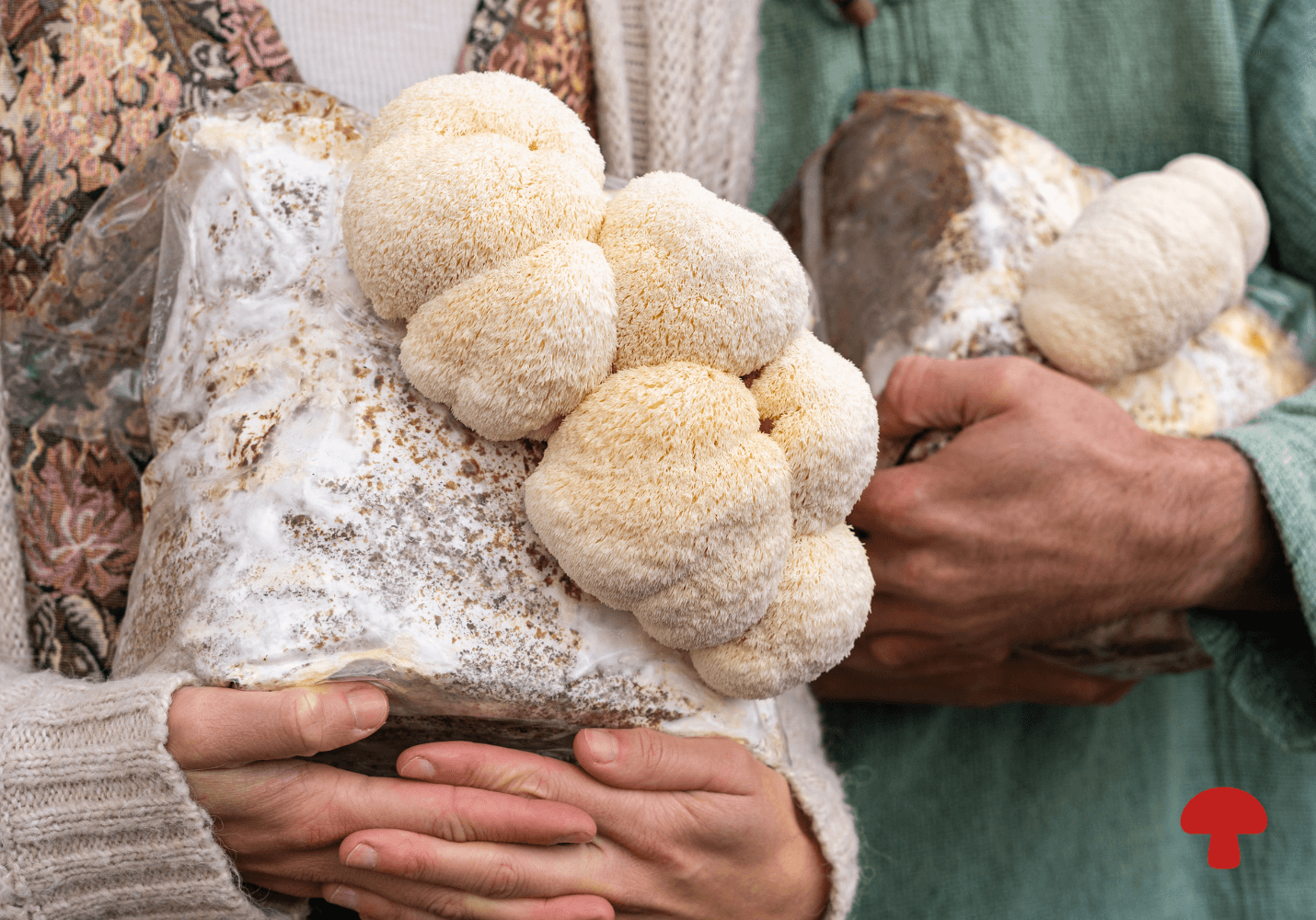
The fruiting body is the part most people picture when they think "mushroom." It's the above-ground structure with a cap and stem. Its job in nature is reproduction, releasing spores so the fungus can spread.
The mycelium is the living network of thread-like cells (called hyphae) that grows through wood, soil, or substrate. It's the actual body of the fungus. The fruiting body only appears for a short window in the lifecycle. Meanwhile, the mycelium is producing compounds the entire time it grows.
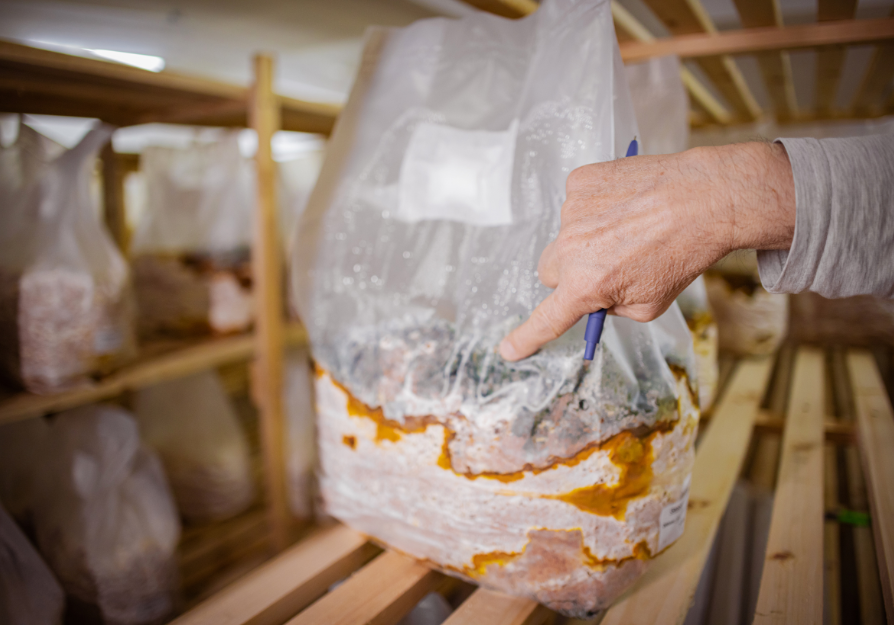
A common myth is that the fruiting body is the "mature" or "active" part, like a fruit on a plant. But fungi are not plants. Bioactive compounds in mushrooms are tissue-specific, meaning some are concentrated in the fruiting body, others are expressed in the mycelium, and the distribution shifts by species and growth phase.
Different Stages, Different Compounds
Research comparing the two tissues across edible fungi shows a clear pattern. Mycelium tends to be richer in primary metabolites: proteins, sterols (including ergosterol, a vitamin D2 precursor), minerals, enzymes, and amino acids. Fruiting bodies tend to concentrate secondary metabolites: species-specific compounds like triterpenes, hericenones, lentinan, and phenolic antioxidants.
Beta-glucans, the most studied immune-active polysaccharides in mushrooms, appear in both tissues. Their concentration varies widely by species and growing conditions, ranging from about 3% to 46.5% of dry weight.
The takeaway is simple. Compounds are tissue-specific. Using only one part of the mushroom means leaving the other compounds behind.
A Side-by-Side Look at Six Species
Here's how that plays out across mushrooms commonly used in supplements and pet care formulas.
Lion's Mane (Hericium erinaceus) — Hericenones are mostly exclusive to the fruiting body. Erinacines are predominantly found in the mycelium. Both compound families are linked to nerve growth factor (NGF) synthesis and neuroprotective activity.
Reishi (Ganoderma lucidum) — Ganoderic acids, the triterpenes linked to anti-inflammatory and liver-supportive activity, are primarily associated with the fruiting body. Immune-supporting polysaccharides are produced by both, and mycelial polysaccharides are often more soluble and chemically uniform.
Turkey Tail (Trametes versicolor) — Beta-glucans are typically higher in the fruiting body. PSK (Krestin) and PSP, the well-studied protein-bound polysaccharide complexes used clinically in Japan, are derived from the mycelium.
Maitake (Grifola frondosa) — The D-fraction beta-glucan complex linked to immune activity is associated with the fruiting body. Lovastatin, which influences cholesterol pathways, appears in significantly higher concentrations in the mycelium.
Shiitake (Lentinula edodes) — A major immunomodulatory beta-glucan, lentinan, is primarily found in the fruiting body. Two compounds linked to cholesterol metabolism, eritadenine and lovastatin, are predominantly produced in the mycelium.
King Oyster (Pleurotus eryngii) — Immunomodulatory polysaccharides appear in both tissues with comparable activity. Key antioxidants, ergothioneine and phenolics, are concentrated in the fruiting body.
The pattern across all six species is consistent. The fruiting body and the mycelium produce different, often complementary, compounds.
Why Should Brands Choose Full-Spectrum?
A full-spectrum mushroom powder includes the mycelium, the fermented substrate it grew on, and some of the fruiting bodies. It captures the organism the way it actually grew, rather than isolating one stage of its lifecycle. For formulators, that means a single ingredient delivers a wider range of the compounds the mushroom naturally produces, including those tissue-specific bioactives the research keeps pointing to.
There are practical advantages too. Cultivated mycelium can be grown under sterile, food-grade conditions, which helps reduce contamination risk from heavy metals or pathogens sometimes associated with wild-harvested fruiting bodies. Controlled cultivation also supports consistent levels of bioactive compounds batch to batch, which matters when a formula needs to perform the same way every time it ships. And full-spectrum ingredients align naturally with clean-label, whole-food, and sustainability trends that consumers increasingly look for on a label.
Concentrated extracts and fruiting-body-only powders answer different formulation questions, and they have a real place in the industry. Full-spectrum answers a specific one: what does this mushroom actually produce, across its full lifecycle?
🧪 Formulator's Corner
Full-spectrum can be the smarter choice when you want the broadest functional profile from a single ingredient, when clean-label and whole-food positioning matter to your brand, when batch-to-batch consistency from a controlled environment is a priority, or when your target benefit relies on compounds expressed in both tissues, like NGF support in Lion's Mane or immune and gut support in Turkey Tail.
Together, Not Competitors
Fruiting body and mycelium are not competitors. They are two stages of one organism, each producing compounds the other doesn't. Choosing full-spectrum is how we preserve the way nature actually built these mushrooms, and it's the foundation of every product we make at Myzel Organics.
Disclaimer: Any statements or claims about the possible health benefits conferred by any foods, natural health products, or supplements have not been evaluated by the Canadian Food Inspection Agency (CFIA), Health Canada, or the Food & Drug Administration (FDA) and are not intended to diagnose, treat, prevent, or cure any disease.
Related products
Formulating with functional mushrooms? Source full-spectrum, organic, bulk supply from Myzel.
Our Full-Spectrum Newsletter
Stay ahead of the competition with the latest mushroom science, education, and innovation at Myzel.