

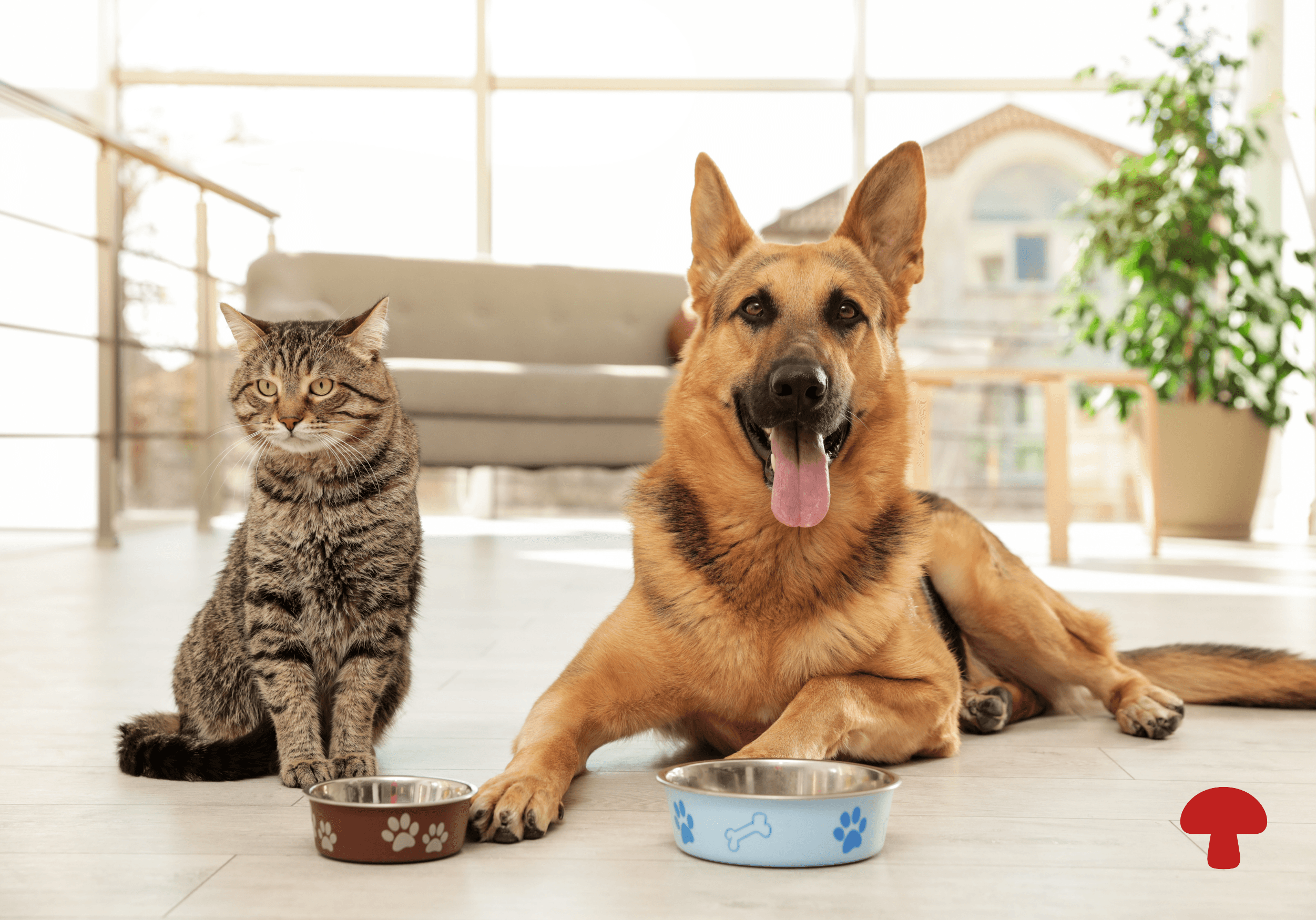
Cats and dogs both detect umami, the savory taste of protein-rich food. Mushrooms are one of the most concentrated natural sources of umami compounds in the plant world. Shiitake, King Oyster, Maitake, Oyster, and Lion's Mane each bring a different taste profile that cats and dogs respond to for reasons rooted in taste receptor biology.
The best pet supplement in the world does nothing if the pet refuses to eat it. Palatability is the hidden variable in every wellness plan. Functional mushrooms have earned a reputation for immune and longevity support, but their taste story is less well understood. This piece walks through what food science and taste receptor biology tell us about why functional mushrooms (all unsurprisingly double as culinary mushrooms!) appeal to cats and dogs, and where the research is still catching up.
What Makes Mushrooms Taste So Meaty?
Umami is the fifth basic taste, alongside sweet, sour, salty, and bitter, and it usually signals protein-rich food. Two categories of compounds specifically drive umami in mushrooms:
- Free amino acids, especially glutamic acid and aspartic acid (often called MSG-like compounds).
- 5'-nucleotides, including GMP, IMP, AMP, and CMP.
These two categories work together, and when both are present, the umami effect multiplies. Food scientists measure the combined effect using Equivalent Umami Concentration, or EUC, expressed as grams of MSG per 100 grams of dry weight. Mushrooms are among the most concentrated natural sources of these compounds in the plant world. That is why chefs have used Shiitake, Oyster, and Porcini in stocks and sauces for centuries.
Do Cats and Dogs Taste Mushrooms the Same Way?
Cats and dogs both detect umami, but their taste receptors are tuned slightly differently.
Cats have a unique umami receptor that responds to nucleotides but does not respond to glutamate. Research shows that changes in key binding sites on the cat receptor prevent it from responding to glutamic or aspartic acid the way human and dog receptors do. For cats, the 5'-nucleotide content of a mushroom matters most.
Dogs have a broader umami receptor that responds to both amino acids and nucleotides, similar to humans. Dogs pick up on both categories of umami compounds, so the full umami profile of a mushroom contributes to canine palatability.
In practical terms, cats prefer high-nucleotide mushrooms while dogs prefer a full umami profile.
Five Functional Mushrooms Through a Palatability Lens
Here is how each of the five mushrooms most commonly used in pet wellness stacks up on umami chemistry.
Shiitake for Dogs and Cats
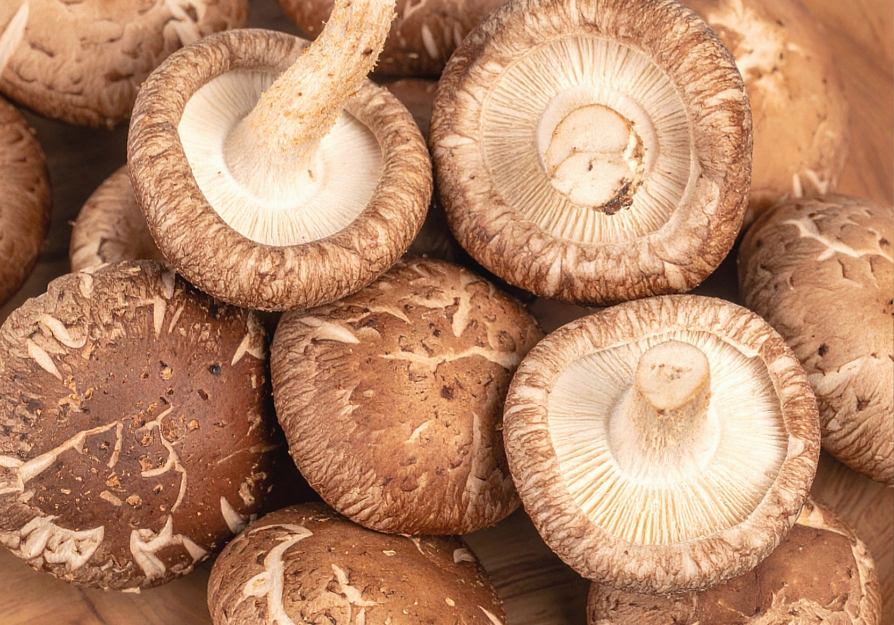
Shiitake (Lentinula edodes) is the reference umami mushroom. The compound 5'-GMP was first identified in Shiitake in the 1950s and remains one of the most studied umami molecules in food science. Dried Shiitake has especially high 5'-GMP because drying breaks down cellular RNA and releases the nucleotide. Shiitake is also rich in glutamate, giving it strong appeal for both cats and dogs. It is the only functional mushroom with a published direct pet palatability trial. This study found that dogs ate more food coated with a Shiitake attractant than plain kibble.
King Oyster for Pets
King Oyster (Pleurotus eryngii) is the dark horse of the group. A study in LWT-Food Science and Technology compared five edible mushrooms and found that King Oyster had the highest total 5'-nucleotide content and the highest overall Equivalent Umami Concentration of the group, outperforming Shiitake, Maitake, Morel, and Oudemansiella radicata. This nucleotide dominance makes it especially interesting for cats. King Oyster is also rich in glutamic acid and alanine, meaning it delivers a full umami hit for dogs as well.
Oyster Mushroom Palatability
Oyster mushroom (Pleurotus ostreatus) is one of the most glutamate-rich cultivated mushrooms and has been used for centuries in traditional cooking as a chicken stock replacement. Its strong glutamate profile gives it clear appeal for dogs. Nucleotide levels vary with strain and processing.
Maitake for Cats and Dogs
Maitake (Grifola frondosa) offers a balanced profile with contributions from both nucleotides and glutamic and aspartic acids. It is described in food science literature as having a robust umami taste and is used commercially as a natural flavor enhancer in food products. This balanced profile makes it a well-rounded option for both cats and dogs.
Lion's Mane for Pets
Lion's Mane (Hericium erinaceus) sits in a unique position. It has high glutamic and aspartic acid content that produces a pronounced umami taste with a mild, seafood-like flavor and meat-like texture. Its 5'-nucleotide content is generally lower than the other species listed here. Lion's Mane remains palatable at higher inclusion rates in food products, which is uncommon among functional mushrooms. This makes it a useful choice when higher functional doses are needed without overwhelming a formulation.
At a glance:
| Mushroom | Main Umami Driver | Cat Appeal | Dog Appeal |
|---|---|---|---|
| Shiitake | 5'-GMP + glutamate | Strong | Strong |
| King Oyster | 5'-nucleotides (highest measured) | Strong | Strong |
| Oyster | Glutamate | Moderate | Strong |
| Maitake | Balanced nucleotides + glutamate | Moderate | Strong |
| Lion's Mane | Glutamate + aspartate | Moderate | Strong |
Four of these five species (Shiitake, Maitake, Oyster, and King Oyster) are also featured on the AAFCO Common Food Index for pet nutrition.
Why Are Dried Mushrooms More Flavorful Than Fresh?
Drying transforms mushroom taste. When mushrooms are dried, cellular enzymes break down RNA and release large amounts of 5'-nucleotides, particularly GMP. This is why dried shiitake has significantly more umami intensity than fresh. High-heat cooking has the opposite effect. It can reduce free amino acids and nucleotides by three to eight times.
Isolated extracts also strip out most of the sensory compounds. Full-spectrum powders preserve the umami profile of the fruiting body along with the beta-glucans that drive immune activity.
What Does the Research Actually Prove?
The honest answer is that most of what we know about functional mushroom palatability in pets comes from combining well-established food chemistry with well-established taste receptor biology. Only one published direct pet feeding trial exists specifically measuring functional mushroom palatability, and, to date, no published head-to-head cat feeding trials have compared these species. The prediction based on chemistry and receptor biology is strong. The comparative feeding data is a gap in the field that will hopefully close in the coming years.
🧪 Formulator's Corner: Building Palatable Functional SKUs
For pet supplement and pet food formulators, palatability is a compliance issue. If the pet does not eat it, the actives do not work.
Species selection carries more weight than most product teams acknowledge. Nucleotide-rich mushrooms like Shiitake and King Oyster offer a chemistry-based advantage for cats. Glutamate-rich species like Oyster and Maitake provide strong dog appeal. Lion's Mane is useful when higher inclusion rates are needed without disrupting the sensory profile.
Full-spectrum powders preserve the umami compounds that isolated extracts remove. Drying method, particle size, and inclusion rate all influence the final result. Myzel supplies full-spectrum, SQF-certified, Canadian Organic Regime and Ecocert certified mushroom powders in bulk for teams building for both dogs and cats.
Compliance Starts With Taste
A supplement only works if the pet accepts it. Functional mushrooms carry measurable umami chemistry that speaks to both cats and dogs, with different species offering different taste advantages. Every pet is different, and daily habits build long-term wellness.
Frequently Asked Questions
Do cats and dogs like the taste of mushrooms?
Many do, especially Shiitake and King Oyster. Cats respond to the nucleotides in mushrooms. Dogs respond to both nucleotides and amino acids. Both compound groups are naturally present in functional mushroom powders.
What is the most palatable functional mushroom for pets?
Shiitake has the most research behind it and remains the reference umami mushroom. King Oyster has the highest measured umami intensity in recent comparative studies. Blends often outperform single species.
Which mushroom is best for picky cats?
Shiitake and King Oyster are strong choices for picky cats. Both are rich in 5'-nucleotides, the compounds that activate the cat umami receptor. Shiitake in particular contains high levels of 5'-GMP when dried.
Are functional mushrooms safe for cats and dogs?
Yes. Cultivated functional mushroom powders are generally safe for pets. Wild mushrooms are not. Consult a veterinarian for pets on medication or with existing health conditions.
Why are dried mushrooms more flavorful than fresh?
Drying breaks down cellular RNA in mushrooms and releases 5'-nucleotides, which are the compounds that create umami taste. High-heat cooking can reduce these compounds significantly.
Disclaimer: Any statements or claims about the possible health benefits conferred by any foods, natural health products, or supplements have not been evaluated by the Canadian Food Inspection Agency (CFIA), Health Canada, or the Food & Drug Administration (FDA) and are not intended to diagnose, treat, prevent, or cure any disease.
Related products
Formulating with functional mushrooms? Source full-spectrum, organic, bulk supply from Myzel.

Our Full-Spectrum Newsletter
Stay ahead of the competition with the latest mushroom science, education, and innovation at Myzel.