
📌 Quick Answer
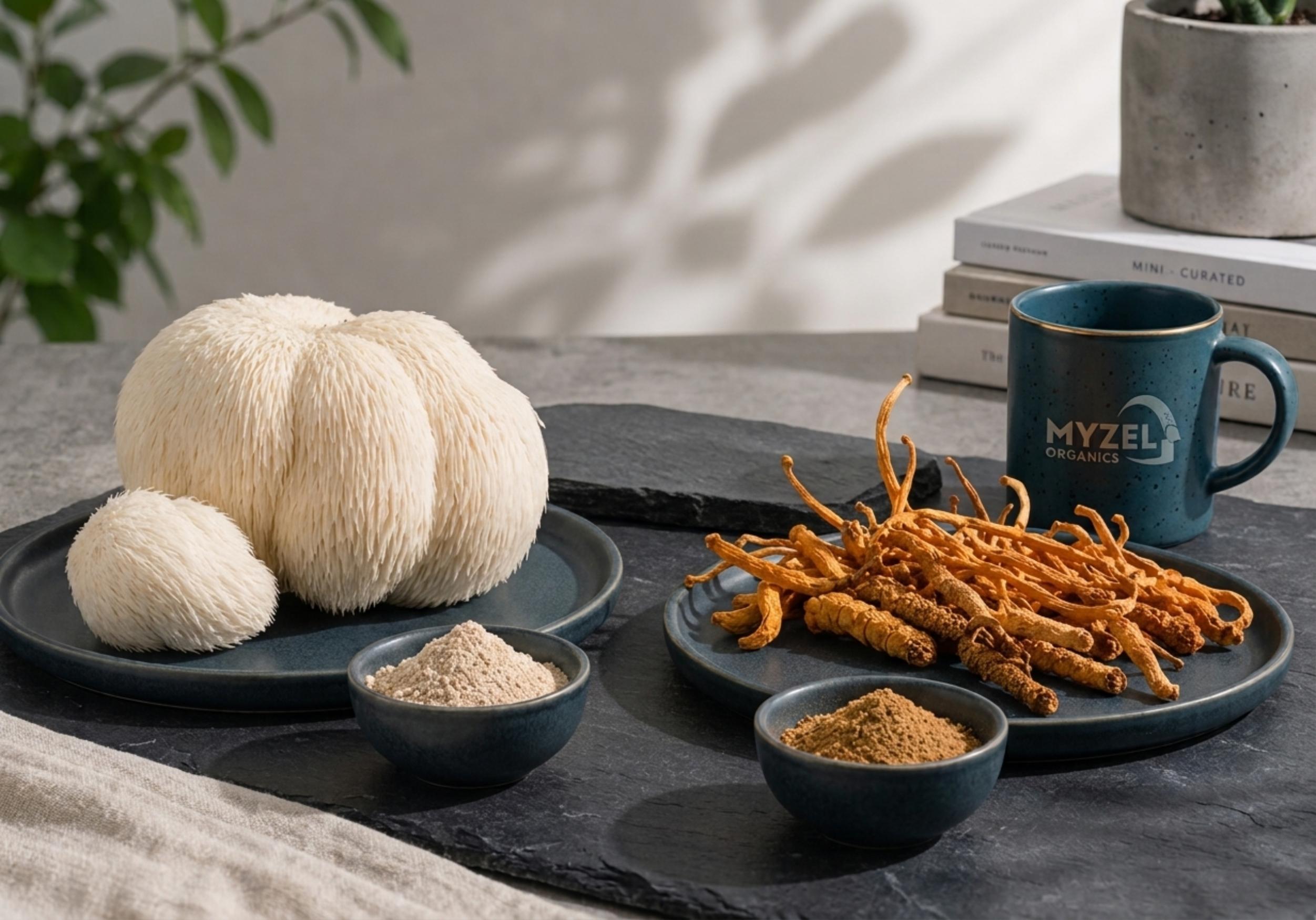
Focus and energy depend on several body systems working together. Lion's Mane and Cordyceps get most of the attention, but Reishi, Maitake, Chaga, King Oyster, Oyster, and Turkey Tail each play a real role in how clearly you think and how steady your energy feels.
Clear thinking and steady energy sit near the top of most wellness lists. They are also two of the main reasons people reach for functional mushrooms.
The usual story stops at two species: Lion's Mane for focus and Cordyceps for energy. Both deserve the attention as they do support focus and energy, but the fuller story is more interesting. Focus and energy are not single switches inside the body, but, in fact, they are outputs of several systems that lean on each other. If you’ve slept poorly, you can’t focus. If you haven’t eaten and your blood sugar crashes, you’ll feel drained of energy. If you’re chronically stressed, then good luck focusing or feeling energized. The mushrooms that support these outcomes tend to work on different pieces of the picture.
Which mushrooms support focus?
Focus depends on healthy neurons, a balanced stress response, protection from oxidative wear, and a well-supported gut. Let’s look at the functional mushroom species that can help sharpen focus, and explore the mechanisms at work.
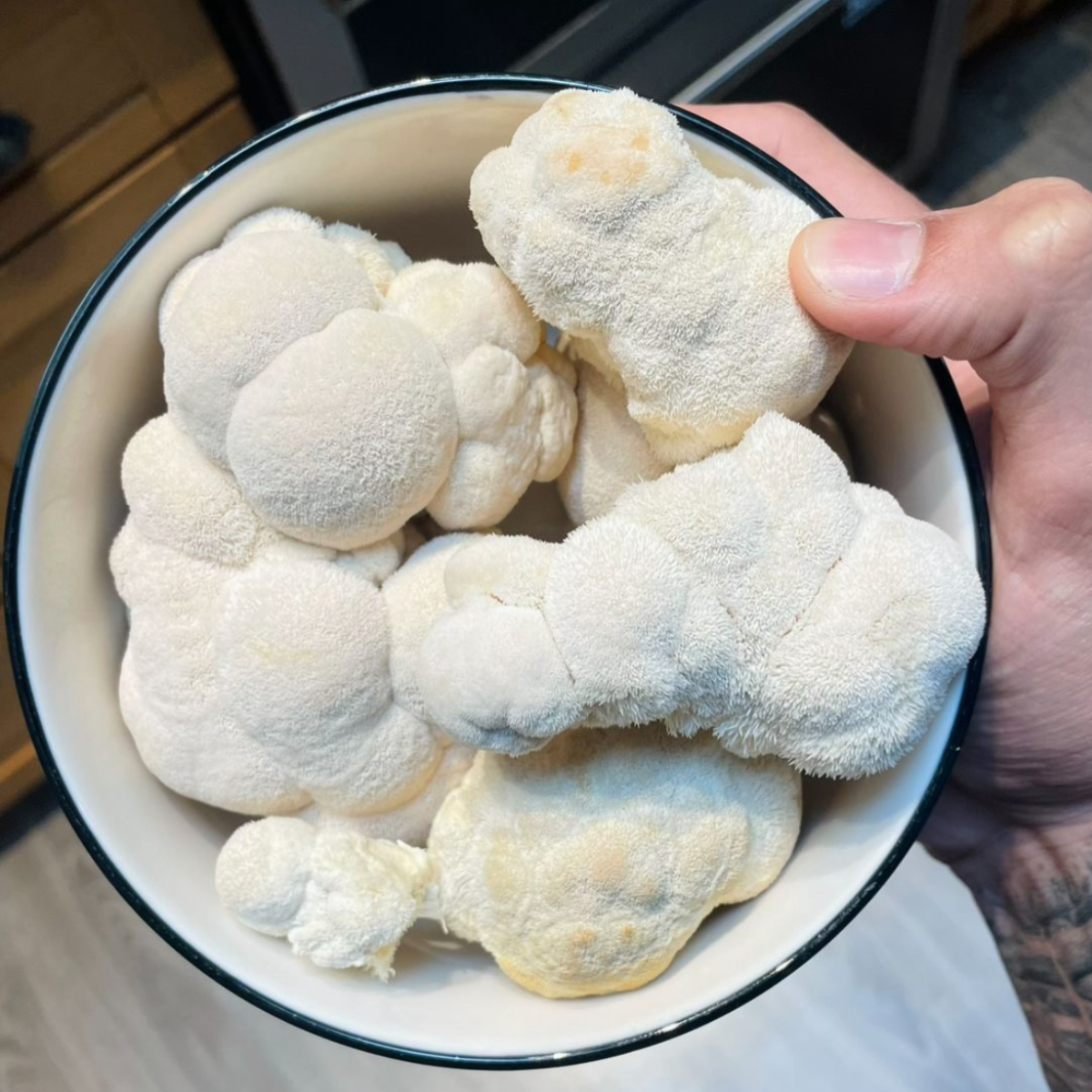
Lion's Mane (Hericium erinaceus) is the headline species. Its fruiting body contains hericenones, and its mycelium contains erinacines. Both compound families stimulate the synthesis of Nerve Growth Factor (NGF), which helps neurons grow and stay healthy. Erinacine A is small enough to cross the blood-brain barrier. A review in Frontiers in Nutrition covering 26 studies confirmed Lion's Mane influences not just NGF pathways, but also BDNF (Brain-Derived Neurotrophic Factor) pathways, a critical cellular signaling network in the nervous system that supports the growth, survival, maturation, and functional plasticity of neurons. Effects build over weeks of daily use, which would signal support and not acute stimulation.
Reishi (Ganoderma lucidum) deserves more credit for mental clarity. Its ganoderic acids are linked to the hypothalamic-pituitary-adrenal (HPA) axis, the system that governs cortisol. When cortisol rhythms are off, sleep suffers, and so does focus. Reishi works upstream to help bring that stress signal back into balance.
King Oyster and Oyster (Pleurotus eryngii and Pleurotus ostreatus) are two of the richest mushroom sources of ergothioneine, an amino acid the body cannot make on its own. Recent research links ergothioneine to BDNF expression and mitochondrial function in brain cells. A Singapore study of adults aged 60 and older found that people who ate mushrooms more than twice a week had a lower risk of mild cognitive impairment.
Turkey Tail (Trametes versicolor) supports focus through the gut. Its polysaccharide complexes PSP and PSK interact with the gut microbiome, and the gut sends signals to the brain. Studies on the connection between the gut and cognition are advancing in real time, but it’s clear that a healthier gut seems to support clearer thinking and a more stable mood.
Which mushrooms support energy?
Energy depends on how well cells produce ATP, how steady blood sugar stays, and how much oxidative wear the body can handle. Which mushrooms can help support these different systems? Let’s look at the functional mushrooms that science can provide evidence for their energizing effects.
Cordyceps (Cordyceps militaris) is the headline species. It contains cordycepin and adenosine, compounds linked to cellular ATP production, which is the primary molecular energy currency used to power nearly all cellular activities, such as muscle contraction, active transport, and chemical synthesis. A 3-week trial in active adults showed gains in VO2max and time to exhaustion with a Cordyceps militaris blend. A study in 48 athletes reported improved blood oxygen saturation and delayed fatigue. Cordyceps does not spike energy like caffeine, but rather it supports sustainable physical energy over weeks of consistent use.
Maitake (Grifola frondosa) supports steady energy through blood sugar. Its polysaccharides have been shown to improve insulin sensitivity. A 2024 study in npj Science of Food showed Maitake improved blood sugar handling through changes in the gut microbiota. Steady blood sugar is one of the clearest drivers of reliable energy through the day.
Chaga (Inonotus obliquus) contributes antioxidant support through its phenolic compounds and melanin. Mitochondria burn oxygen to produce energy, and that process wears on cells. This is where antioxidant support comes into play, as it helps cells keep producing energy cleanly.
The lines between focus mushrooms and energy mushrooms are not necessarily very strict. For example, Reishi supports both by improving sleep, while Chaga protects the mitochondria the brain depends on. Each species acts through a different biological pathway, which is why they work naturally alongside one another, and why taking multiple mushroom species can have various compounding effects.

Why full-spectrum matters for focus and energy
Focus and energy are multi-system outcomes, and intact, whole mushrooms are built for multi-system work. Full-spectrum mushrooms contain the complete bioactive profile, from both the mycelium and the fruiting body. In many mushroom species, a certain bioactive compound that offers powerful support will only live in the fruiting body, while another will only live in the mycelium. Preserving the full-spectrum mushroom captures all of them in their natural proportions, allowing for complete, complementary support.
Of course, mushrooms are also food. The body has been working with whole mushrooms for a long time, and it recognizes the full matrix of beta-glucans, chitin, polysaccharides, proteins, and sterols the way it recognizes any whole food. When the chemistry stays intact, the body knows what to do with it.
🧪 Formulator's Corner
Building a mushroom blend to support a specific outcome, like focus or energy, involves more than picking the right species.
A smart first move would be to pair for complementary pathways. Certain mushrooms work through entirely different biology. Several mushrooms work directly through the gut. More specifically, Lion’s Mane offers NGF support and stimulates cognitive support through the gut, Reishi adds HPA axis and sleep support, Maitake contributes blood sugar stability, etc. Species that act through separate pathways give the formula broader coverage without overlap.
Be sure to match any claims to the mushroom species named at the Latin binomial level. “Cordyceps” on an ingredient deck could mean Cordyceps militaris, Cordyceps sinensis, or the lab-grown CS-4 strain. Each has a different bioactive profile and a different clinical evidence base. The cordycepin and VO2max research is predominantly on militaris. This level of precision protects both the mechanism story and the regulatory position.
Frequently Asked Questions
Can I take Lion's Mane and Cordyceps together?
Yes. There is no evidence of negative interaction, and each works through a different pathway.
How long before these mushrooms work?
Allow 2 to 4 weeks for Cordyceps effects on exercise capacity to build. Lion's Mane cognitive effects often show at 8 to 16 weeks of daily use.
Which single mushroom is best for focus?
Lion's Mane has the strongest clinical research base for cognitive outcomes.
Which single mushroom is best for energy?
Cordyceps militaris has the strongest clinical research base for endurance and oxygen use.
Are these effects stimulant-like?
No. These mushrooms work through biological signaling and metabolic support, not central nervous system stimulation.
Focus and energy come from several systems working together. Lion's Mane and Cordyceps belong at the center of the conversation, and Reishi, Maitake, King Oyster, Oyster, Chaga, and Turkey Tail each add something real. For more on how our full-spectrum powders are made and tested, visit the Myzel Organics catalog.
Disclaimer: Any statements or claims about the possible health benefits conferred by any foods, natural health products, or supplements have not been evaluated by the Canadian Food Inspection Agency (CFIA), Health Canada, or the Food & Drug Administration (FDA) and are not intended to diagnose, treat, prevent, or cure any disease.
Related products
What Myzel offers
Myzel Organics grows and produces organic, full-spectrum mushroom ingredients in Canada for brands and manufacturers. Explore species-specific compositions and discuss samples, specifications, testing documentation and bulk supply with our team.
Our Full-Spectrum Newsletter
Stay ahead of the competition with the latest mushroom science, education, and innovation at Myzel.