

📌 Quick Answer
Turkey Tail (Trametes versicolor) is one of the most studied functional mushrooms for dogs. Its beta-glucans may help “train” a dog’s innate immune cells to respond faster and more precisely to everyday threats. Research shows this training effect fades when supplementation stops, which is why daily, consistent use matters.
What Is Turkey Tail Mushroom and Why Is It Studied So Often in Dogs?
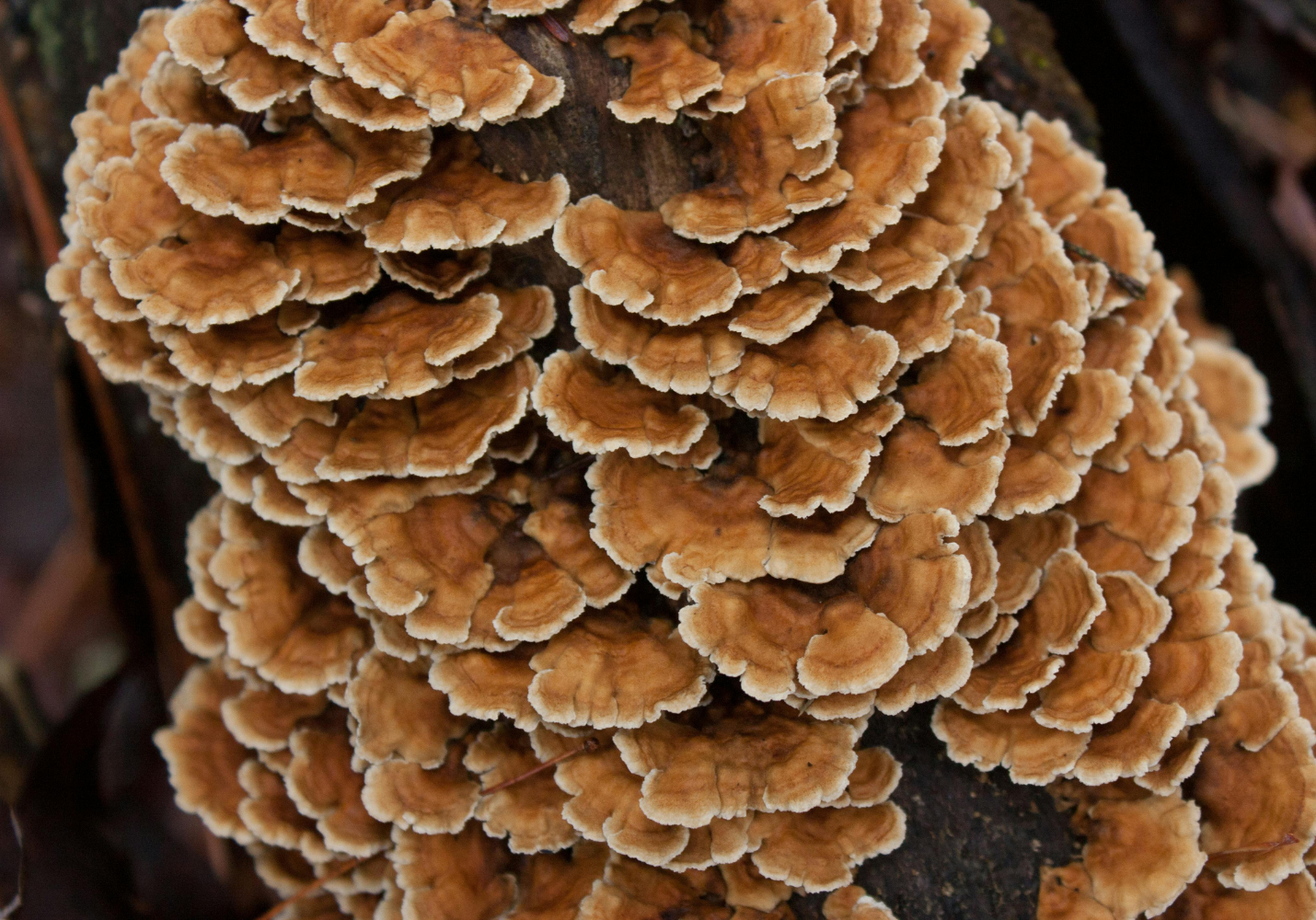
Turkey Tail is a fan-shaped mushroom with colorful bands. Its scientific name is Trametes versicolor. In traditional Chinese medicine, it is known as “yun zhi,” or cloud mushroom.
Turkey Tail has more published studies in dogs than any other functional mushroom. Most of the research focuses on two compounds found in its cell walls: polysaccharide-K (PSK) and polysaccharopeptide (PSP). Both are types of beta-glucans, a class of sugar-based molecules linked to immune health.
What Does Turkey Tail Do for a Dog's Immune System?
Turkey Tail is often described as an “immune booster.” A more accurate word is “modulator.” That means it may help the immune system stay balanced.
The best-known canine study came from the University of Pennsylvania and it gave PSP to 15 dogs with splenic hemangiosarcoma after surgery. The dogs showed the longest survival times reported for that cancer at the time. A larger follow-up confirmed PSP was safe, even with chemotherapy, and added useful detail. The response varied by sex, with male and female dogs showing different patterns.
These studies focus on dogs with serious diseases. The real story for everyday pet parents is what Turkey Tail may do for a healthy dog over time.
The New Science: What Is “Trained Immunity” in Dogs?
For many years, scientists believed only one part of the immune system had memory. That part is called the adaptive immune system. It makes T cells and B cells that remember past infections.
New research has changed that view. The innate immune system, which includes cells like macrophages, can also form a kind of memory. Scientists call this “trained immunity.”
Here is how it works in simple terms. Beta-glucans from mushrooms attach to a receptor on immune cells called Dectin-1. This triggers small changes in how the cell’s genes are read. The cell remembers the beta-glucan and responds faster the next time it meets a threat.
In 2020, a study showed this training effect happens in dogs, not only in humans and mice. Their lab study used canine macrophages and confirmed the same cellular changes seen in other species. A companion study showed beta-glucans helped improve the antibody response to rabies vaccines in dogs.
More recent work showed mushroom beta-glucans drive the same trained immunity response through Dectin-1 as beta-glucans from other sources. This helps explain why daily Turkey Tail may do more than offer a quick lift. It may help teach the immune system to work smarter.
Why Daily Turkey Tail Matters More Than a One-Time Dose
Trained immunity does not last forever. The cellular markers that create the “memory” fade over time without fresh exposure.
A particular study tested beta-glucan supplements in beagles for four weeks. Antibody levels went up during the study. When supplementation stopped, the benefits reversed quickly.
This is why daily, consistent use of a Turkey Tail supplement is more useful than a single large dose. The goal is steady, repeatable exposure that keeps the immune system in a trained state.
Turkey Tail for Senior Dogs: Supporting the Aging Immune System
As dogs age, their immune systems change. This is called immunosenescence. Chronic low-grade inflammation also tends to rise with age, a pattern called inflammaging. A 2024 review summarized the current evidence for both patterns in dogs and cats.
Senior dogs may benefit from steady immune support. One canine study found daily mushroom polysaccharides improved immune cell activity and vaccine antibody response in adult dogs. No negative effects were seen on digestion, skin, or coat. The researchers used Ganoderma lucidum, not Turkey Tail, but the mechanism involves the same beta-glucan pathways.
A daily, food-form Turkey Tail powder is one way to add this kind of support to a senior dog’s routine. Always talk to your veterinarian before starting any new supplement, especially for a dog with health conditions or on medication.
Is Turkey Tail Safe for Dogs?
Across published canine studies, Turkey Tail has been well tolerated. No systemic side effects were reported in a major study, even in dogs on chemotherapy. The follow-up confirmed the same safety profile.
A good rule is to start with a modest, repeatable amount and work with a veterinarian to adjust based on your dog’s size, age, and health status.
🧪 Formulator's Corner: Delivering the Full Beta-Glucan Matrix
For pet food and supplement formulators, how beta-glucans are presented to the Dectin-1 receptor matters. Research shows particle size, surface structure, and the integrity of the fungal cell wall all affect how well immune cells recognize and respond.
Full-spectrum whole mushroom powders preserve the native cell wall matrix. The beta-glucans stay bound inside the chitin structure the way they exist in nature. Concentrated extracts isolate specific fractions and have their own role in the formulator’s toolkit, especially for targeted applications.
Both formats have a place. Myzel’s full-spectrum Turkey Tail powder is designed to deliver the intact matrix, giving the dog’s immune cells the shape and context they evolved to recognize.
Frequently Asked Questions
Are Turkey Tail mushrooms safe for dogs with cancer?
Published research in dogs with hemangiosarcoma shows Turkey Tail PSP is safe, including alongside chemotherapy. It should be used as a complementary tool under veterinary care, not as a replacement for standard treatment.
How long does it take for Turkey Tail to work in dogs?
Trained immunity builds over weeks of consistent daily intake. Research in dogs by Stuyven et al. (2010) showed measurable changes within four weeks of daily beta-glucan supplementation.
Can I give my dog Turkey Tail every day?
Yes. Daily use fits the biology. Trained immunity requires steady exposure, and the effects fade when supplementation stops.
Does Turkey Tail work for healthy dogs or just sick ones?
Most headline research focuses on dogs with cancer, but the trained immunity pathway is active in all dogs. Daily Turkey Tail may help healthy dogs maintain balanced immune function over time.
What is the difference between Turkey Tail extract and whole mushroom powder for dogs?
Extracts concentrate specific fractions like PSK or PSP. Whole mushroom powders deliver the full cell wall matrix, including beta-glucans bound in their native chitin structure.
Disclaimer: Any statements or claims about the possible health benefits conferred by any foods, natural health products, or supplements have not been evaluated by the Canadian Food Inspection Agency (CFIA), Health Canada, or the Food & Drug Administration (FDA) and are not intended to diagnose, treat, prevent, or cure any disease.
Related products
What Myzel offers
Myzel Organics grows and produces organic, full-spectrum mushroom ingredients in Canada for brands and manufacturers. Explore species-specific compositions and discuss samples, specifications, testing documentation and bulk supply with our team.
Our Full-Spectrum Newsletter
Stay ahead of the competition with the latest mushroom science, education, and innovation at Myzel.