


Kidneys are quiet workers. They clean the blood, balance water and salt, help control blood pressure, and even help make red blood cells. Dogs rarely show signs of kidney trouble until a lot of the damage is already done. That is why daily wellness habits matter, especially for older dogs.
Chronic kidney disease, or CKD, affects about 1 in 10 dogs, and the risk goes up as dogs get older. Functional mushrooms have been studied more and more for kidney support, mostly in people and in lab animals. Here is what the science says, where the strongest evidence sits, and how mushrooms like Cordyceps and Reishi fit into daily care.
Understanding Kidney Health in Dogs
Vets use a system called IRIS staging to track kidney disease in dogs. It looks at markers in the blood and urine to see how well the kidneys are working. One marker called SDMA often rises before another one called creatinine, which is why regular blood tests matter for senior dogs.
Kidney disease usually gets worse over months or years. Once nephrons (the tiny filter units in the kidneys) are damaged, they do not grow back. But good daily habits, the right food, and supportive ingredients can help slow things down and protect what is left.
Cordyceps and Kidney Support: What the Research Shows
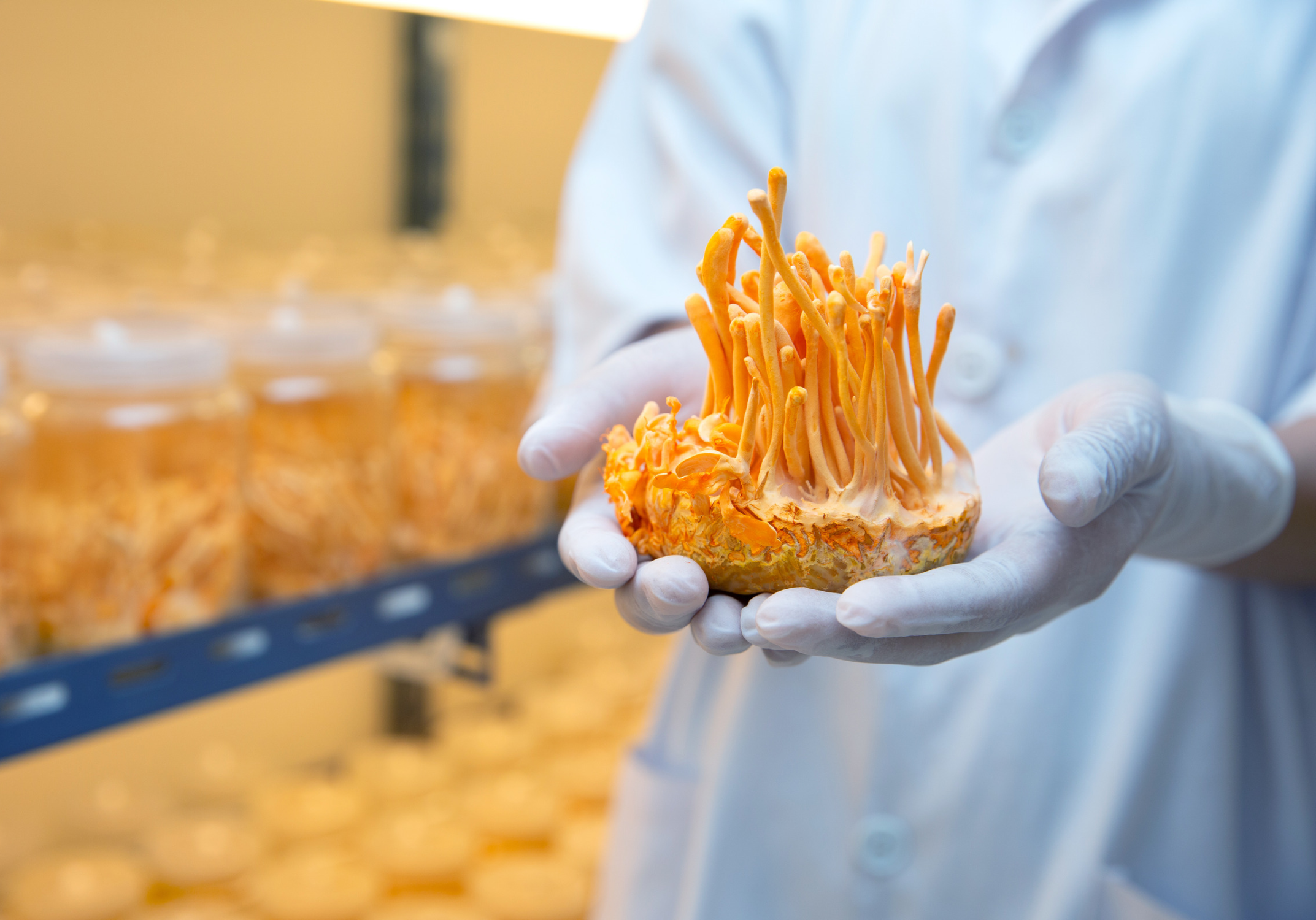
Cordyceps is a mushroom used in traditional Chinese medicine for a long time and often paired with kidney support. It contains helpful compounds called cordycepin and adenosine, in addition to beta-glucans and polysaccharides.
A review of 15 studies covering 1,310 patients found that Cordyceps was linked to better kidney function in humans. Another review of a Cordyceps product found lower levels of waste products in the blood and lower markers of inflammation in human kidney patients.
Studies in rats add more clues. A 2014 rat study showed that Cordyceps helped protect the liver and heart in animals with kidney disease by reducing stress on their cells. A review of research on Cordyceps and kidney disease in diabetes found that it reduced inflammation, calmed cell stress, and helped the immune system stay balanced.
Direct studies on Cordyceps in dogs with kidney issues are still needed, but what we do have is a strong understanding of how it works at the cell level.
Cordycepin, Cell Energy, and Why It Matters for Kidneys
Kidneys use a lot of energy. Their tiny filter units run on ATP, which is the fuel cells created in mitochondria. And when mitochondria stop working well, kidney damage often follows.
One of the star compounds in Cordyceps is called cordycepin, and it helps turn on a cell energy sensor called AMPK. In lab studies, cordycepin has been linked to less cell stress and less inflammation in kidney tissue. Cordycepin is found in both the mycelium and the fruiting body of the mushroom. Each part offers something a little different, which is why a full-spectrum approach that uses both makes sense.
The Gut-Kidney Connection
Gut bacteria make chemicals that travel through the blood and reach the kidneys. When the gut is out of balance, harmful waste products can build up and put more stress on the kidneys.
Beta-glucans from mushrooms act like food for good gut bacteria. In dogs, studies show that beta-glucans at around 10.6 mg per kilogram of body weight per day improved gut bacteria balance. A study on Cordyceps in rats with kidney disease from diabetes found that it reduced kidney scarring by helping balance the gut microbiome.
Reishi, Turkey Tail, and Maitake in Supporting Roles
Reishi (Ganoderma lucidum) is packed with compounds called triterpenoids and polysaccharides. Reishi research found that it has protective effects on the kidneys in both long-term and sudden kidney injury studies, with a strong safety record. A rat study showed Reishi reduced kidney damage caused by a strong antibiotic, mainly by lowering cell stress. In dogs, studies confirmed Reishi is safe and supports the immune system at 5 to 15 mg per kilogram of body weight per day.
Turkey Tail (Trametes versicolor) helps gut health through its beta-glucans, which ties back to the gut-kidney connection. Maitake (Grifola frondosa) supports steady blood sugar and cell metabolism, which matters because the kidneys can be affected by how the body handles sugar.
What This Means for Daily Wellness
Functional mushrooms are daily wellness ingredients; however, they are not medicine and they cannot treat kidney disease. Any dog showing signs of kidney trouble should see a veterinarian. What mushrooms can do is support cell health, help the body handle stress, and support a healthy gut.
Being consistent with mushroom ingredients is essential to experience the full benefits available. Dog studies found that beta-glucan benefits faded quickly once dogs stopped getting the supplement. What matters most is a verified level of active compounds and the right dose for the species.
🧪 Formulator’s Corner
For formulators building daily wellness products with kidney support in mind, a full-spectrum blend of Cordyceps (for cordycepin, adenosine, and antioxidant activity) and Reishi (for triterpenoids and immune-supportive polysaccharides) provides a strong mushroom base. Turkey Tail can be layered in to support the gut-kidney connection through prebiotic beta-glucans.
Complementary botanicals and nutraceuticals worth considering include astragalus (traditionally paired with Cordyceps for kidney support), rehmannia, dandelion leaf, nettle leaf, omega-3 fatty acids (EPA/DHA), CoQ10 for cell energy support, and B-vitamins to help replace what the kidneys lose.
Frequently Asked Questions
Are functional mushrooms safe for dogs with kidney issues?
Cordyceps and Reishi are generally well tolerated in dog studies at set doses. Any dog with diagnosed kidney disease should only use supplements with a vet’s guidance.
Which mushroom is best for kidney support in dogs?
Cordyceps has the deepest research for kidney function in people and rats. Reishi and Turkey Tail add antioxidant, immune, and gut support.
How long before functional mushrooms show benefits?
Beta-glucans need to be given every day to keep working. Studies show the effects fade once dogs stop getting them.
Can Cordyceps help older dogs feel more energetic?
Cordycepin supports cell energy signaling, which matters for senior dogs whose bodies still need fuel to keep going.
Functional Mushrooms and Kidney Support for Dogs
The research on functional mushrooms and canine kidney support is still growing. What we know so far makes a strong case for daily inclusion, with Cordyceps leading the evidence base and Reishi, Turkey Tail, and Maitake adding complementary support. The strongest daily wellness strategies are rarely about a single ingredient. They are about layered, consistent support that respects how the body actually works. Functional mushrooms fit naturally into that picture.
Disclaimer: Any statements or claims about the possible health benefits conferred by any foods, natural health products, or supplements have not been evaluated by the Canadian Food Inspection Agency (CFIA), Health Canada, or the Food & Drug Administration (FDA) and are not intended to diagnose, treat, prevent, or cure any disease.
Related products
What Myzel offers
Myzel Organics grows and produces organic, full-spectrum mushroom ingredients in Canada for brands and manufacturers. Explore species-specific compositions and discuss samples, specifications, testing documentation and bulk supply with our team.
Our Full-Spectrum Newsletter
Stay ahead of the competition with the latest mushroom science, education, and innovation at Myzel.