


📌 Quick Answer
Peer-reviewed studies show that Shiitake, Reishi, and Cordyceps mushrooms may support immune function, recovery, and metabolic health in horses. The strongest equine evidence sits with Shiitake in Thoroughbred racehorses and Reishi in general horse immunity. Cordyceps research is heavier on human athletes, but points to real relevance for working horses.
Racehorses live under a load that most animals never face. Early-morning training, long transport, grain-heavy diets, and competition stress all push the body in ways that affect immunity, recovery, and gut health. Research shows that Thoroughbreds in training suffer from gastric ulcers, and training stress is known to suppress the immune system. These are exactly the pressure points where functional mushrooms are being studied.
Shiitake, Reishi, and Cordyceps each bring a different compound profile, and together they map onto three of the most important areas of racehorse health: immune resilience, exercise recovery, and gastric wellness. The science is still growing, but the direction is clear enough to pay attention to.
Gastric Ulcers and the Case for Mushroom Polysaccharides
Equine Gastric Ulcer Syndrome (EGUS) is one of the most common health issues in performance horses. Published studies suggest that 80 to 100 percent of Thoroughbred racehorses in training suffer from the squamous form of the disease, known as Equine Squamous Gastric Disease. The condition has been linked to reduced performance in racehorses.
The causes are well understood. High-grain diets, limited forage, long training sessions, transport, and stress all expose the stomach lining to excess acid without enough buffering from saliva. The result is damage to the gastric mucosa, which is the protective layer that lines the stomach.
This is where mushroom polysaccharides enter the conversation. A 2025 review in the Journal of Agricultural and Food Chemistry examined how polysaccharides from edible and medicinal mushrooms help protect the gastric and intestinal barriers. Species including reishi and shiitake showed potential to protect gastric mucosa, reduce inflammation, and support healing in animal ulcer models.
Direct equine ulcer trials are still needed. But the same mushroom species that have shown immune and metabolic benefit in horses also carry documented gastroprotective polysaccharides in other animal models. This makes them worth watching for racehorse stomach health, alongside proven management strategies such as increased forage access and veterinary care.
Results of Shiitake Given to 20 Thoroughbred Racehorses
In 2022, researchers at Wroclaw University of Environmental and Life Sciences published the first study on Shiitake mushroom supplementation in young Thoroughbred racehorses. Twenty horses, aged three to four years, were split into two groups. The supplemented group received 30 grams of dried Shiitake daily for four months while they continued regular training. Then blood was drawn and tested every four weeks.
These results were meaningful. Monocyte levels, a type of white blood cell linked to immune defense, were significantly higher in the supplemented group. Alkaline phosphatase, a liver and bone enzyme, was consistently lower across every blood test. Cholesterol levels also dropped steadily across the study period.
A companion study from the same team found similar patterns in 17 adult riding horses given 60 grams of Shiitake daily for five months. That group showed higher hemoglobin, hematocrit, and lymphocyte levels, along with a better albumin to globulin ratio.
Shiitake naturally contains beta-glucans, iron, B vitamins, and lentinan. These compounds help explain the blood changes seen in both studies, and they set up the broader case for why this mushroom matters in equine nutrition.
Reishi Mushroom and the Equine Immune System
Reishi has one of the oldest documented equine studies in the functional mushroom space. In 2004, researchers in Taiwan fed Reishi to horses and measured changes in blood biochemistry and immune activity.
Horses in the Reishi group had higher levels of key immune cells called T-lymphocytes, which are the white blood cells that help the body find and fight off threats. When those horses were exposed to a test substance, their bodies also produced more antibodies, and produced them faster than the control group. The authors concluded that Reishi was safe for horses and helped strengthen their immune response.
Supporting work in dogs backs this up. A 2024 University of Illinois study found that dogs given Reishi over 12 weeks showed increased phagocytic activity, meaning their immune cells were better at engulfing and clearing out harmful invaders, along with a stronger antibody response to vaccination.
Reishi's bioactive profile includes triterpenoids, polysaccharides, and sterols. These compounds are most often credited with its immune-balancing effects, and as we will see shortly, they also appear in the growing literature on gastric health.
Cordyceps, Exercise, and Recovery
Direct equine research on Cordyceps is still limited. The strongest evidence comes from the human exercise literature, which is relevant for racehorse formulators thinking about recovery and endurance. Cordyceps is already validated by the market, as it is used in several existing equine formulations.
A 2026 narrative review in Nutrients looked at five intervention studies with 321 participants. Daily doses ranged from 1 to 12 grams across 1 to 16 weeks. The review found measurable effects with Cordyceps on exercise capacity and recovery markers such as creatine kinase and inflammatory response.
A separate 2025 trial reported that two weeks of Cordyceps supplementation reduced malondialdehyde, a chemical marker that rises when the body is under oxidative stress from hard exercise, after an exhaustion test at 80% of maximum aerobic capacity.
The bioactive drivers include cordycepin, adenosine, and ergothioneine. These compounds are being studied for their roles in oxygen use, mitochondrial function, and oxidative stress response.
Why Working Horses Need Thoughtful Nutritional Support
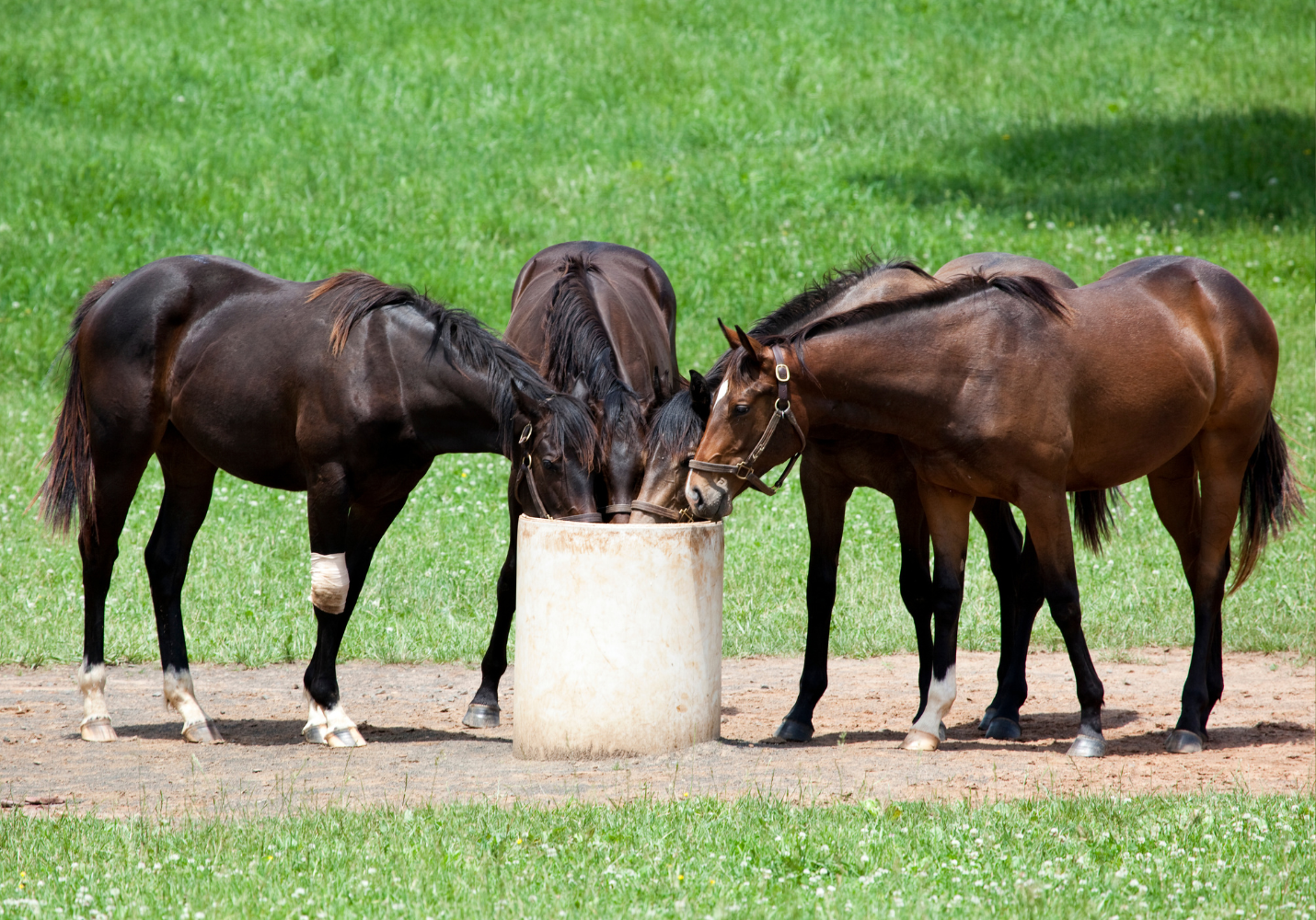
Training, travel, and competition all place real stress on a horse's immune system. Peer-reviewed work in Thoroughbreds has shown that beta-glucan supplementation improved innate immune parameters during regular training. Functional mushrooms are one tool among several for formulators looking to support equine athletes. Hay quality, electrolytes, veterinary care, and training load all matter alongside any supplement decision.
🧪 Formulator's Corner
For brands building equine supplements, each species plays a different role. Shiitake offers immune and metabolic marker support, with the clearest racehorse-specific evidence to date. Reishi delivers adaptive immune and antibody response support, with safety confirmed in horses. Cordyceps brings bioactives tied to exercise capacity and oxidative stress, with equine-specific trials still needed.
Given the high prevalence of gastric ulcers in performance horses, the polysaccharide fraction of shiitake and reishi is a formulation angle worth considering, especially in products aimed at racing and sport disciplines.
For palatability in equine feeds, carrier selection matters. The Soroko-Dubrovina trial used a granulate base of barley, wheat bran, corn, lucerne, and molasses to deliver the shiitake dose. Powder forms also blend well into pelleted or textured horse feeds.
Looking Ahead
The equine functional mushroom research base is small but growing. Shiitake, reishi, and cordyceps each bring a distinct compound profile, and together they touch on three issues that matter most for working horses: immune resilience, exercise recovery, and gastric health. More trials with larger groups and longer timeframes will fill in the picture. For brands and horse owners interested in evidence-informed nutrition, the direction of the science is clear.
Frequently Asked Questions
Are functional mushrooms safe for horses?
Published studies on shiitake and reishi report no adverse effects at the doses tested. Cordyceps safety data mostly comes from human research. A veterinarian should guide any new supplement decision.
Which functional mushroom is best for racehorses?
Shiitake has the most direct racehorse evidence. Reishi has broader immune data. Cordyceps has the strongest performance-related research in human athletes, with equine trials still needed.
Can functional mushrooms help with gastric ulcers in horses?
Direct equine ulcer studies are still needed. However, polysaccharides from reishi and shiitake have shown gastroprotective effects in animal models, which is why they are drawing interest for racehorse stomach health. Any ulcer management should always involve a veterinarian.
How long until results show in blood work?
The Thoroughbred shiitake study found significant monocyte changes by day 56 and alkaline phosphatase changes by day 28.
Can functional mushrooms replace veterinary care?
No. They work alongside sound veterinary care, hay quality, training load management, and rest.
Disclaimer: Any statements or claims about the possible health benefits conferred by any foods, natural health products, or supplements have not been evaluated by the Canadian Food Inspection Agency (CFIA), Health Canada, or the Food & Drug Administration (FDA) and are not intended to diagnose, treat, prevent, or cure any disease.
Related products
Formulating with functional mushrooms? Source full-spectrum, organic, bulk supply from Myzel.
Our Full-Spectrum Newsletter
Stay ahead of the competition with the latest mushroom science, education, and innovation at Myzel.