

📌 In Brief
Lion's Mane mushroom (Hericium erinaceus) supports brain health through two pathways. The first is direct. Compounds called hericenones and erinacines help the body make nerve growth factor (NGF), a protein that keeps brain cells healthy. The second is indirect. Lion's Mane fiber feeds gut bacteria that produce chemicals which talk to the brain. Both pathways show up in recent human research.
What Is Lion's Mane and Why Do Researchers Study It?
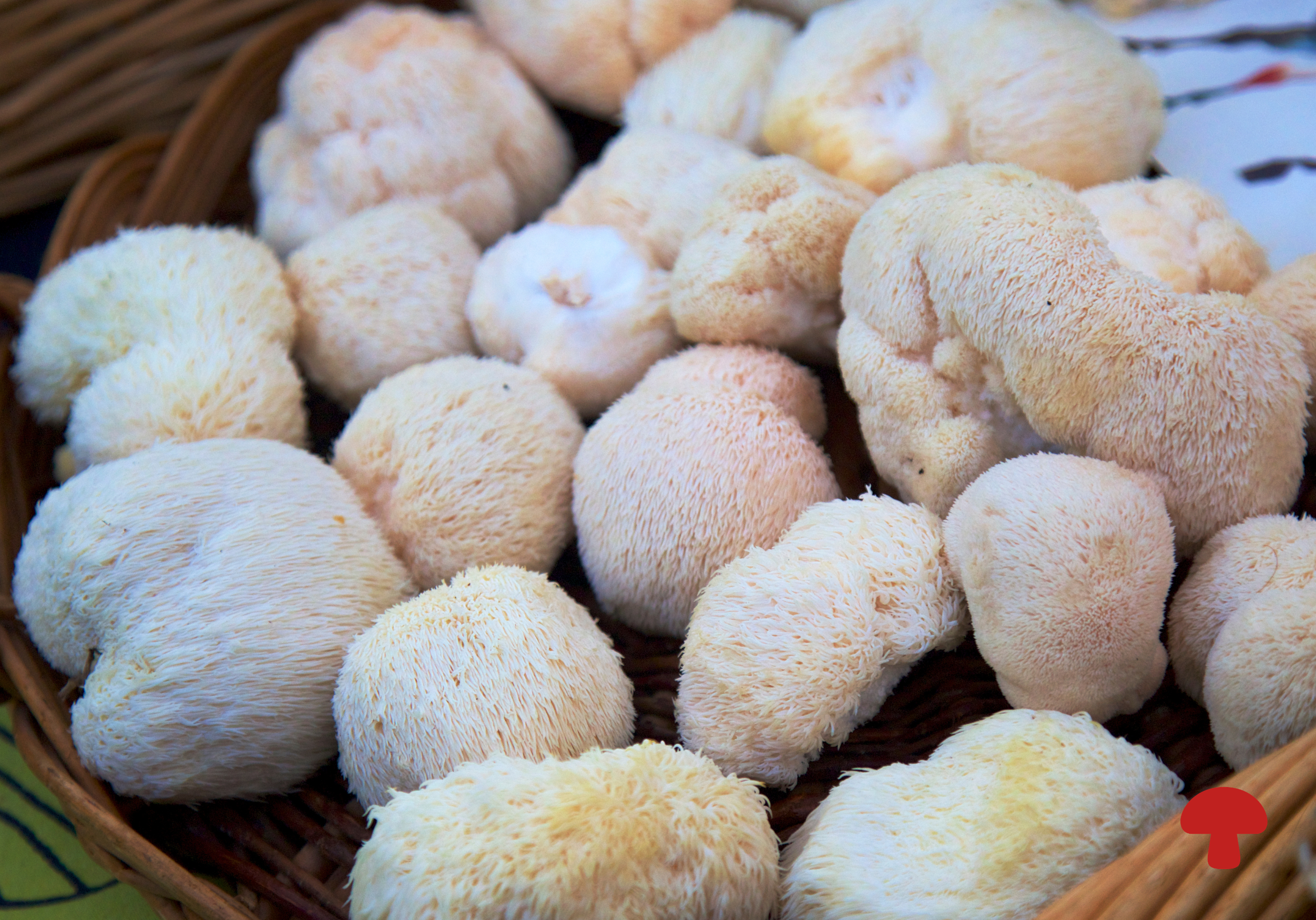
Lion's Mane is a white, shaggy mushroom that grows on hardwood trees. Its scientific name is Hericium erinaceus. In Japan it is called Yamabushitake.
Researchers have identified more than 70 active compounds in Lion's Mane. Two groups stand out for brain research. Hericenones are found mostly in the fruiting body, the mushroom part that grows above ground. Erinacines are found mostly in the mycelium, the root-like network that grows below the surface. Both groups are linked to nerve growth factor production.
Pathway One: The Direct Route to Brain Cells
Nerve growth factor, or NGF, is a protein your body uses to keep neurons alive and growing. A related protein called brain-derived neurotrophic factor, or BDNF, does similar work and is linked to learning and memory.
Hericenones and erinacines can cross the blood-brain barrier and support NGF production. In 2024 clinical trials, older adults who took an erinacine enriched Lion's Mane supplement showed faster basic cognitive processing and higher blood BDNF levels compared to placebo.
A 2025 systematic review added another finding. Erinacines A and C uniquely trigger a transcription factor called Nrf2. Nrf2 turns on the body's own antioxidant defense system inside brain cells.
Pathway Two: The Gut-Brain Route Most Articles Skip
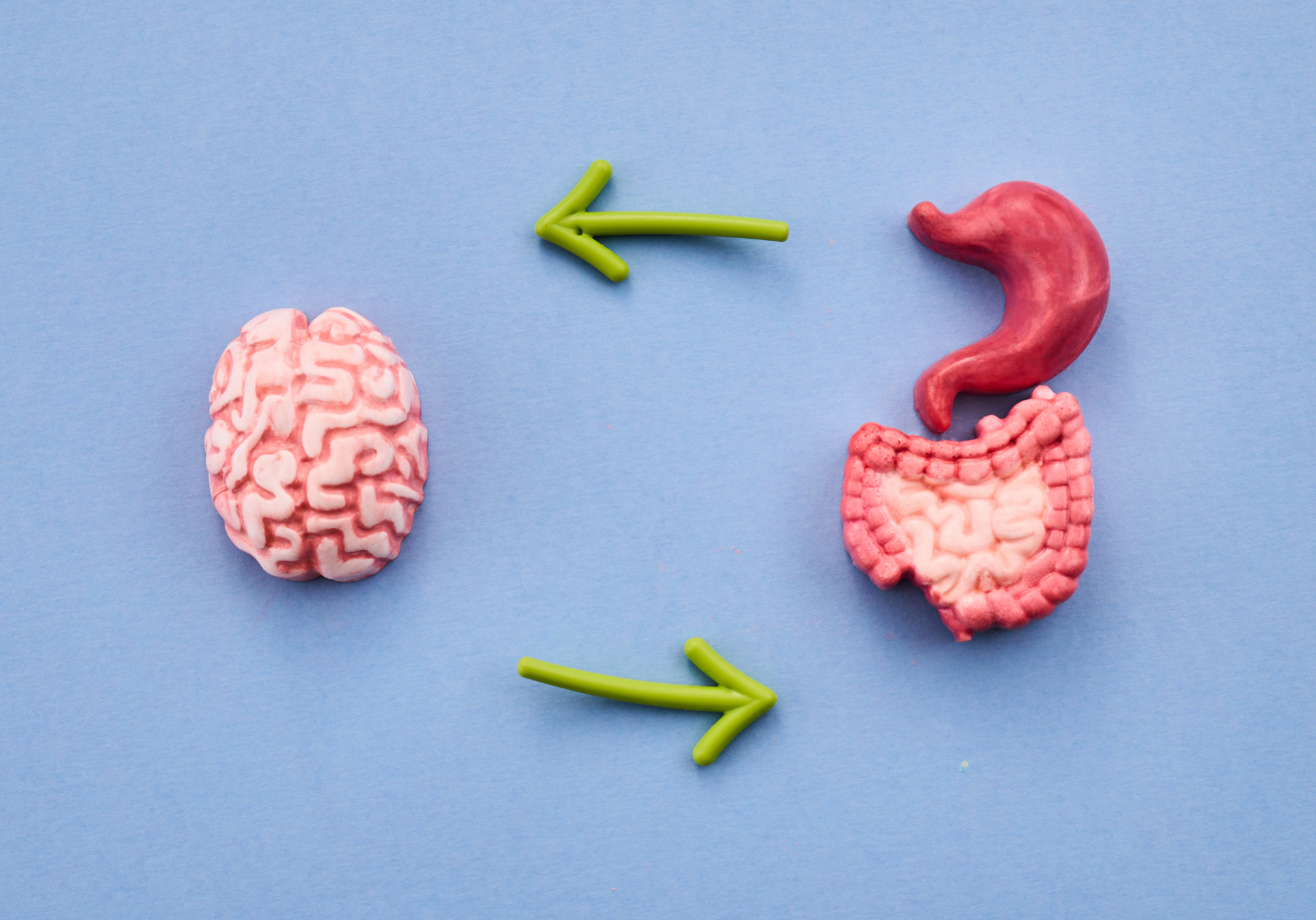
Your gut and your brain are in constant conversation. Scientists call this the gut-brain axis. Gut bacteria make chemicals that travel through the bloodstream and the vagus nerve, where they can affect mood, focus, and sleep.
Lion's Mane feeds helpful gut bacteria. Its beta-glucans, polysaccharides, and chitin are fibers that human digestion cannot break down. Instead, they travel to the colon, where bacteria ferment them.
A 2025 systematic review found that Lion's Mane polysaccharides increased the growth of Faecalibacterium, Bifidobacterium, and Blautia. These bacteria produce short-chain fatty acids (SCFAs) and help the body make serotonin and GABA, two neurotransmitters that affect mood and calm.
The 2024 clinical trial mentioned earlier also found greater gut bacteria diversity in the Lion's Mane group. That diversity was linked to higher levels of a brain-signaling peptide called NPY.
Preclinical research in elderly mice supported the same picture. A study showed that Lion's Mane extract reduced gut inflammation and improved cognitive performance together, suggesting the two systems move in step.
What Do the Human Trials Actually Show?
Human research on Lion's Mane and cognition is growing. Here are some of the key studies:
- Mori et al., 2009. Adults aged 50 to 80 with mild cognitive impairment took Lion's Mane for 16 weeks. Their scores on a standard cognitive function test improved compared to placebo.
- Docherty et al., 2023. Healthy young adults showed faster performance on a specific cognitive task after Lion's Mane.
- Černelič Bizjak et al., 2024. Erinacine A-enriched Lion's Mane increased BDNF and cognitive processing speed in a double-blind trial.
- Daoust et al., 2026 (preprint). Adults aged 40 to 75 with self-reported cognitive concerns took a full-spectrum (fruiting body plus mycelium) Lion's Mane preparation daily for 8 weeks. The supplemented group showed significantly better visual attention, working memory, sleep quality, morning restedness, and mood compared to placebo.
The findings are encouraging, but the research is also still early. Since most trials are short and preparations vary, longer studies will help confirm effects over years rather than weeks.
Why Full-Spectrum Matters for the Gut-Brain Story
Full-spectrum Lion's Mane uses the whole organism. It includes the fruiting body (rich in hericenones), the mycelium (rich in erinacines), and the fiber matrix of beta-glucans, polysaccharides, and chitin that feeds the gut.
That matters because the two pathways run on different compounds. Hericenones and erinacines act on brain cells. Fibers act in the gut. A full-spectrum powder brings all three categories together from a single ingredient.
🧪 Formulator's Corner
Full-spectrum Lion's Mane pairs well with a short list of research-backed companions in cognitive support formulas. Bacopa monnieri is studied for memory consolidation. L-theanine supports focus without stimulation. Citicoline or Alpha-GPC provide choline, a precursor for the neurotransmitter acetylcholine. Omega-3 DHA supports neuronal membranes. B-complex vitamins support methylation and brain energy metabolism. Adaptogens such as Ashwagandha or Rhodiola can help where stress and cognition overlap.
For a mushroom-only blend, Reishi for calm, Cordyceps for daytime energy, and Chaga for antioxidant load are logical complements.
Formulators building for the gut-brain angle should also consider delivery format and prebiotic co-formulation to protect fiber integrity through processing.
Frequently Asked Questions
How does Lion's Mane make you feel?
Many users report a calm, clear focus rather than a stimulant lift. In clinical trials, measured changes include improved attention, working memory, sleep quality, and mood.
How quickly does Lion's Mane kick in?
Most clinical trials measure results after 4 to 16 weeks of daily use. Short-term effects on specific tasks have been seen within hours in some studies, but larger cognitive and mood shifts tend to build over weeks.
Is there a downside to Lion's Mane?
Lion's Mane is well-tolerated in published trials. Some people with mushroom allergies may react. Anyone taking anticoagulant medication should speak with a doctor first, as some early animal data suggests a possible interaction.
Can Lion's Mane and Ashwagandha be taken together?
No published research shows a problem combining them, and the two are often paired in cognitive and stress-support formulas. Individual response varies. Starting lower and consulting a healthcare provider is a reasonable approach.
What should you not mix with Lion's Mane?
Caution is suggested with blood-thinning medications. People with autoimmune conditions on immunosuppressants should check with a provider, since Lion's Mane engages the immune system. Pregnancy and breastfeeding are not well-studied in this context, so caution is advised.
Disclaimer: Any statements or claims about the possible health benefits conferred by any foods, natural health products, or supplements have not been evaluated by the Canadian Food Inspection Agency (CFIA), Health Canada, or the Food & Drug Administration (FDA) and are not intended to diagnose, treat, prevent, or cure any disease.
Related products
Formulating with functional mushrooms? Source full-spectrum, organic, bulk supply from Myzel.
Our Full-Spectrum Newsletter
Stay ahead of the competition with the latest mushroom science, education, and innovation at Myzel.