


📌 Quick Answer
Reishi (Ganoderma lucidum) has been used for over 2,000 years to support rest and calm. New research suggests Reishi may improve sleep quality and lower stress hormones like cortisol by acting on the gut-brain axis, GABA pathways, and the body's stress response system. The strongest effects come from the whole mushroom, where triterpenes and polysaccharides work together.
What Is Reishi, and Why Has It Been Used for Sleep?
Reishi mushroom, known as Lingzhi in China, has been part of East Asian wellness traditions for more than 2,000 years. People have long called it a calming tonic for restlessness and poor sleep.
Modern science has found more than 400 bioactive compounds in Reishi. These compounds developed together inside the mushroom. A full-spectrum, whole-food form delivers them balanced in the way that nature produces.
What Does the Research Say About Reishi and Sleep?
In June 2026, researchers presented a study at the SLEEP 2026 conference comparing reishi extract to melatonin. In an 8-week trial of 218 adults with chronic insomnia, Reishi reduced insomnia severity scores more than melatonin. The trial had a 95.9% completion rate and reported no serious side effects. These findings are still a conference abstract and need full peer review, but the signal is promising.
Older research supports the same pattern. A 2021 study in Scientific Reports found that Reishi improved sleep in mice through the gut microbiome and the serotonin pathway. When researchers depleted the gut bacteria, the sleep benefit disappeared. A 2024 study in Frontiers in Pharmacology showed that Reishi improved both REM and non-REM sleep in rats by supporting the GABA system.
Human trials on Reishi are still growing in number and size, but the direction of the evidence is consistent.
How Does Reishi Affect Stress and Cortisol?
Stress and sleep are tied together through the HPA axis. This is the system that controls cortisol, the body's main stress hormone. When cortisol stays high in the evening, it is harder to fall asleep and stay asleep.
In 2026, researchers published a 12-week randomized trial in Brain and Behavior. Adults with moderate to severe stress took a mushroom blend that included Reishi. The group taking the blend showed significant drops in cortisol and ACTH, along with better anxiety and perceived stress scores.
An earlier 2016 study in fibromyalgia patients found that 6 grams of Reishi daily improved sleep quality, mood, and physical fitness over several weeks.
Reishi is often called an adaptogen, a group of ingredients that can help the body balance its response to stress. They do not shut the stress system down, but offer a steady, balancing effect.
How Does Reishi Work in the Body?
Three pathways stand out in current research:
- Gut-brain axis. Beta-glucans and other polysaccharides feed gut microbes that send calming signals to the brain.
- GABA system. Triterpenes called ganoderic acids work on GABA receptors, the same system that quiets brain activity during sleep.
- HPA axis. Reishi compounds help regulate how the body releases cortisol.
Triterpenes are fat-soluble, while polysaccharides are water-soluble. Each group acts on different pathways. The full mushroom contains both groups, in the balance the fungus produced during its life cycle. A 2024 review in Heliyon confirmed that different Reishi preparations produce different effects, which supports the case for full-spectrum intake.
Why a Daily Food-Form Dose May Be the Best Approach
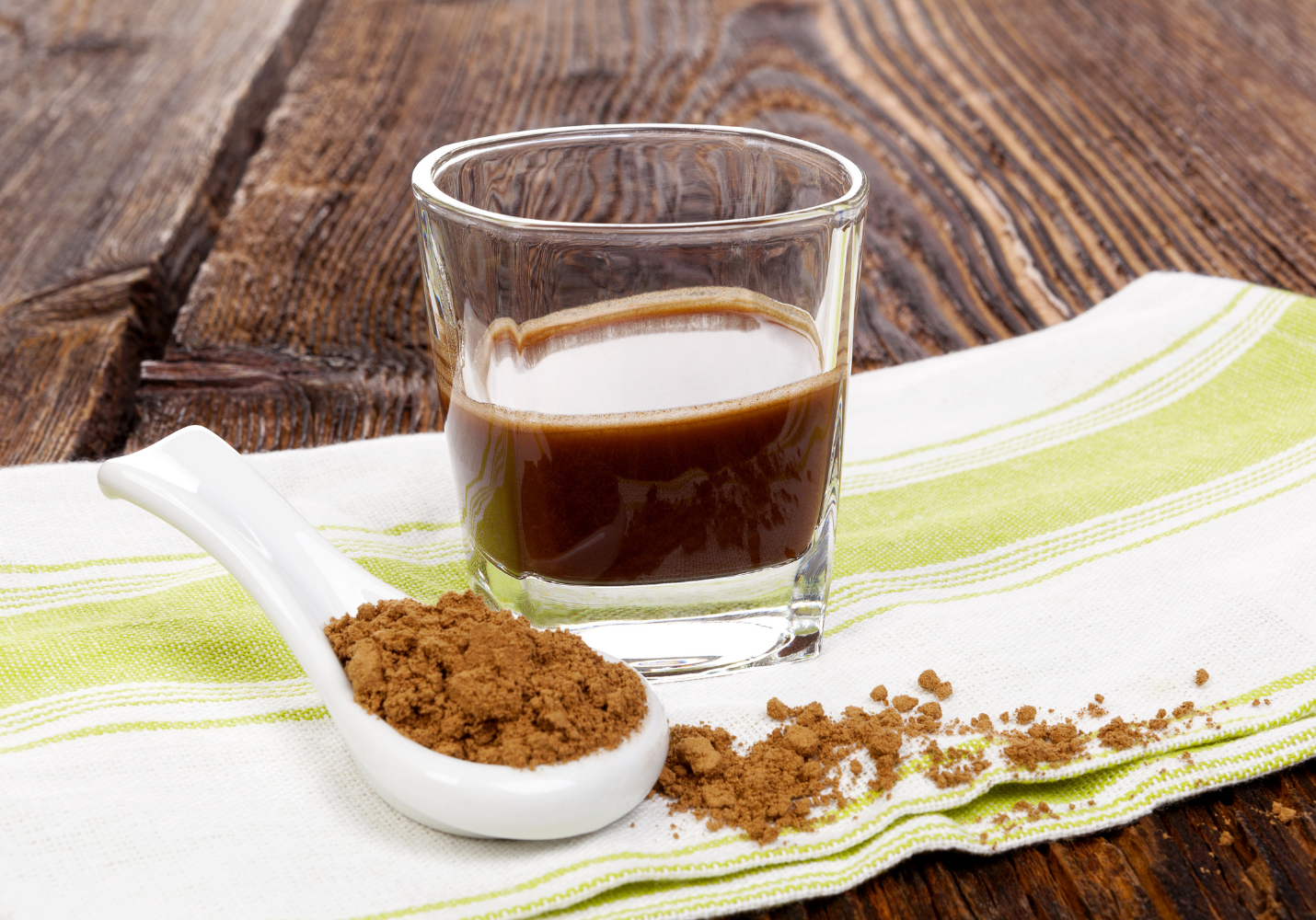
The body processes whole mushroom powder the same way it processes any food. The intake is slow and steady, and the natural cofactors stay intact. Daily low-level use fits the adaptogen model. Benefits build over weeks of consistent intake. The 12-week stress trial measured outcomes at 6 and 12 weeks. The SLEEP 2026 trial ran 8 weeks.
The full-spectrum matrix also preserves bioactive compounds that researchers may not have fully studied yet. The food form is gentle and does not overstimulate the body or push it toward sedation. The body recognizes whole-mushroom powder as food and processes it accordingly.
How Quickly Does Reishi Work?
Reishi is not a sedative, nor does it act like one. Effects build with consistent daily use, usually over several weeks. Set expectations for gradual support, not a quick effect.
Is Reishi Safe to Take Every Day?
Reishi has been consumed daily in traditional practice for centuries. Modern clinical trials report high safety profiles with no serious adverse events. Mild digestive upset is uncommon. People taking blood-thinning medications should speak with a healthcare provider before adding Reishi, since it may have mild blood-thinning effects of its own.
🧪 Formulator's Corner
Sleep and stress formulations face a specific challenge with reishi. The two most important compound groups act through different pathways and have different solubilities. Triterpenes (ganoderic acids) are fat-soluble and work on the GABA system and HPA axis. Polysaccharides and beta-glucans are water-soluble and work on the gut-brain axis and immune signaling. For this application, both pathways matter.
Full-spectrum powder delivers both compound groups in a single ingredient, in the ratios the mushroom produced during its life cycle. The whole-mushroom matrix also retains minor compounds like sterols, peptides, and nucleosides that may contribute to the overall effect.
The gentle action of a food-form powder is a formulation advantage in this category. Reishi layers well with ashwagandha, L-theanine, magnesium, and other calming ingredients without pushing the product toward sedation. It supports the stack rather than dominating it.
Myzel's full-spectrum Reishi is grown and processed in Canada under SQF certification and Canadian Organic Regime (Ecocert) credentials.
Frequently Asked Questions
Does Reishi make you feel good?
Many users report a sense of calm and better sleep over time. Reishi works gradually, not like a sedative.
What is the main benefit of Reishi?
The strongest evidence points to sleep support, stress and cortisol regulation, and immune support.
Can I take Reishi before bed?
Yes. Many people take Reishi in the evening, though consistent daily use matters more than timing.
What's better, Reishi or Lion's Mane?
They support different goals. Reishi is studied for sleep, stress, and immunity. Lion's Mane is studied for focus and cognitive support. Both can fit in the same routine.
Is Reishi safe during pregnancy?
Research in pregnant populations is limited. Pregnant and nursing people should speak with a healthcare provider before use.
Disclaimer: Any statements or claims about the possible health benefits conferred by any foods, natural health products, or supplements have not been evaluated by the Canadian Food Inspection Agency (CFIA), Health Canada, or the Food & Drug Administration (FDA) and are not intended to diagnose, treat, prevent, or cure any disease.
Related products
Formulating with functional mushrooms? Source full-spectrum, organic, bulk supply from Myzel.
Our Full-Spectrum Newsletter
Stay ahead of the competition with the latest mushroom science, education, and innovation at Myzel.